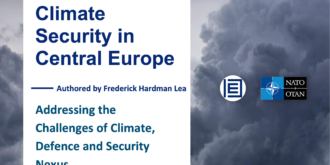
Climate Security in Central Europe (Addressing the Challenges of Climate, Defence and Security Nexus)
Institute for Central Europe has completed a report on climate security in Central Europe, which was part of several months of work on a project fu...

Politici by měli více naslouchat vědeckým diskusím, říká ředitelka Institutu pro střední Evropu Katarína Cséfalvayová
Podílet se na vzniku kvalitní politiky založené na věcných argumentech a zasazené do evropského kontextu – to je nemalá ambice mladého bratislavské...
How to counter controlled misinformation on social networks? Experiences from Ukraine, Georgia and Moldova
Although disinformation and conspiracies are not a new phenomenon in Slovakia or in the world, in recent years we have seen an unprecedented growth...
Handbook of disinformation campaigns
With the rise of information technology and the ever-increasing accessibility of the Internet to the masses, the dissemination of false information...
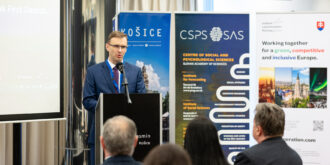
Slovakia – Ukrainian Forum 🇸🇰🇺🇦 / Kharkov days in Košice
Košice, 13.-14. marec 2024 There is perhaps no more important and complex topic today than the issues related to the developments in our neighbourh...
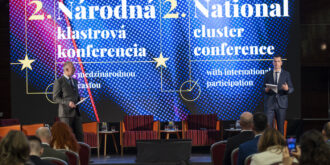
2nd National Cluster Conference
Trnava, 11.-12. marec 2024 ICE participated in the 2nd National Cluster Conference, which welcomed almost 40 cluster organisations from different s...
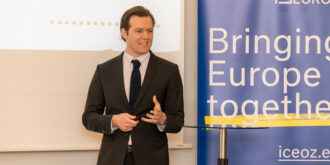
Professional symposium – Slovak Innovation Cluster for Defence and Security
Bratislava, 14.11.2023 Institute for Central Europe, c.a., organized an expert symposium to inform about the aims, objectives, and progress of the ...
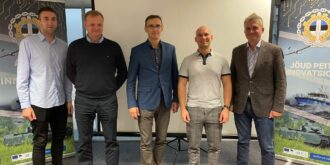
Slovak Innovation Cluster for Defence and Security
Estónsko, 6.10.2023 / Maďarsko, 12.10.2023/ Česká republika, 9.11.2023 International cooperation is a prerequisite for technological development an...
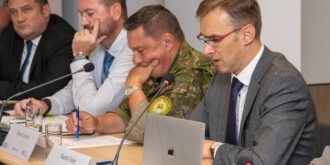
Life Cycle Management of Military Equipment: Experiences, Expectations and Opportunities for Collaboration
Bratislava, 27.9.2023 “Procurement of military equipment represents not only a potential improvement of defence capabilities, but most of the time ...
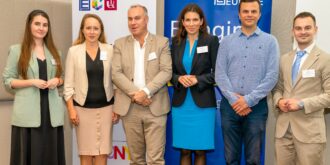
Conference – European asylum policy after Ukraine
Bratislava, 12.-13.7.2023 On 13 July, the conference European Asylum Policy after Ukraine was organised by the Institute for Central Europe in coop...
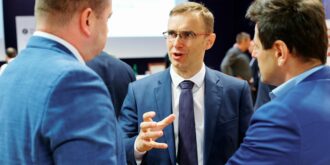
Economic diary
Praha, 2023 “Martin Fedor, Chairman of the Board of Directors of ICE, participated in a symposium of the Economic Daily focused on technology and d...
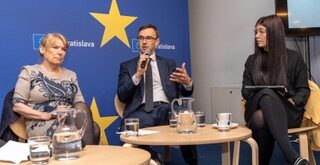
The European Union concerns us
Bratislava, 26.4.2023 “We took part in a panel discussion – The European Union in the context of contemporary challenges – organised by the Europea...
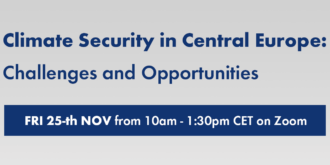
Climate Security in Central Europe: Challenges and Opportunities
Online panel discussion organized within the ACCESS – Addressing the Challenges of Climate, Defence and Security Nexus project, 25.11.2022 The disc...
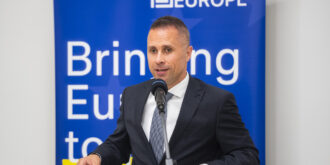
The future of air and missile defence of the Slovak Republic
Expert roundtable discussion, organized within the framework of the project of the same name in Bratislava, 24.6.2022 Round table on the topic of e...
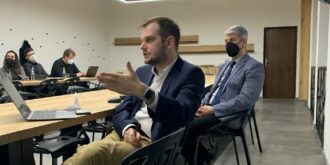
Get info on disinfo
Workshop organized within the project Disinformation: Raising Awareness and Building Resilience, Banská Bystrica, 1.12.2021 The workshop at the Mat...
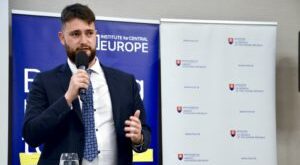
Propaganda tools of Russian actors on social networks – how to recognise and counter them?
Workshop organized within the framework of the project Strengthening Slovakia’s Resilience to Hybrid Threats from Russian Actors – Disinformation C...
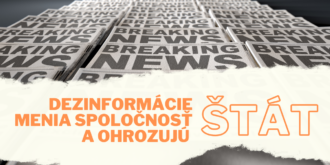
Disinformation changes society and threatens the state
On the first of December, the event “Get info on disinformation” took place at the University of Matej Bel in Banská Bystrica (UMB), the aim of whi...
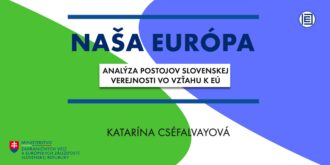
Our Europe – An analysis of Slovak public attitudes towards the EU
The material is an output of the project “Our Europe – Nationwide Citizens’ Consultation in Relation to EU Membership”, implemented wit...
Slovak Innovation Centre for Defence and Security Technologies
2.2.2023 – 30.11.2023 International cooperation is a prerequisite for technological development and provides external know-how that c...
Strengthening Slovakia’s resilience to hybrid threats from Russian actors – disinformation campaigns on social networks
1.7.2021 – 31.12.2021 The main objective of the project was to identify the main elements of disinformation campaigns of Russian acto...
Disinformation: Raising Awareness and Building Resilience
1.9.2021 – 31.12.2021 The aim of the project was to increase both awareness of and resistance to disinfectants, especially among youn...
Our Europe – National citizens’ consultation on EU membership
1.9.2021 – 28.2.2022 The project was aimed at conducting nationwide civic consultations and qualitative assessment of the attitudes of Slovak...
The future of air and missile defence of the Slovak Republic
1.6.2022 – 31.10.2022 In addition to other modernisation objectives, the issue of air and missile defence of the Slovak Republic has ...
ACCESS – Addressing the Challenges of Climate, Defence and Security Nexus
15.4.2022 – 31.12.2022 The project focused on the security and defence impacts of climate change with the aim to open a public debate...

ACRONYM – Advancing Cooperation on Asylum and Migration
1.1.2023 – 31.12.2025 The project, funded under the Horizon Europe scheme, aims to strengthen cooperation between ICE, the University of Liège, and...
Life Cycle Management of Military Equipment: Experiences, Expectations and Opportunities for Collaboration
1.7.2023 – 31.12.2023 “Procurement of military equipment represents not only a potential improvement of defence capabilities, but als...

Slovakia – Ukrainian Forum 🇸🇰🇺🇦 / Kharkov days in Košice
Košice, 13.-14. marec 2024 There is perhaps no more important and complex topic today than the issues related to the developments in our neighbourh...
2nd National Cluster Conference
Trnava, 11.-12. marec 2024 ICE participated in the 2nd National Cluster Conference, which welcomed almost 40 cluster organisations from different s...
Professional symposium – Slovak Innovation Cluster for Defence and Security
Bratislava, 14.11.2023 Institute for Central Europe, c.a., organized an expert symposium to inform about the aims, objectives, and progress of the ...
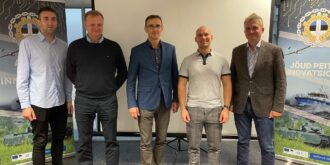
Slovak Innovation Cluster for Defence and Security
Estónsko, 6.10.2023 / Maďarsko, 12.10.2023/ Česká republika, 9.11.2023 International cooperation is a prerequisite for technological development an...
Life Cycle Management of Military Equipment: Experiences, Expectations and Opportunities for Collaboration
Bratislava, 27.9.2023 “Procurement of military equipment represents not only a potential improvement of defence capabilities, but most of the time ...
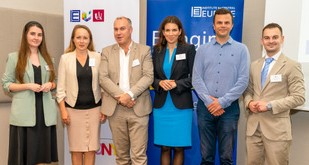
Conference – European asylum policy after Ukraine
Bratislava, 12.-13.7.2023 On 13 July, the conference European Asylum Policy after Ukraine was organised by the Institute for Central Europe in coop...
Economic diary
Praha, 2023 “Martin Fedor, Chairman of the Board of Directors of ICE, participated in a symposium of the Economic Daily focused on technology and d...
The European Union concerns us
Bratislava, 26.4.2023 “We took part in a panel discussion – The European Union in the context of contemporary challenges – organised by the Europea...
Climate Security in Central Europe: Challenges and Opportunities
Online panel discussion organized within the ACCESS – Addressing the Challenges of Climate, Defence and Security Nexus project, 25.11.2022 The disc...
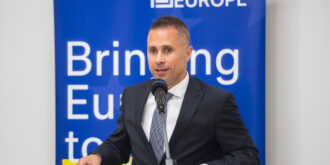
The future of air and missile defence of the Slovak Republic
Expert roundtable discussion, organized within the framework of the project of the same name in Bratislava, 24.6.2022 Round table on the topic of e...
Get info on disinfo
Workshop organized within the project Disinformation: Raising Awareness and Building Resilience, Banská Bystrica, 1.12.2021 The workshop at the Mat...
Propaganda tools of Russian actors on social networks – how to recognise and counter them?
Workshop organized within the framework of the project Strengthening Slovakia’s Resilience to Hybrid Threats from Russian Actors – Disinformation C...
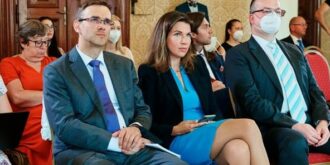
The economics of prevention
Expert conference organized in cooperation with the Health and Economic Journal in Prague, 2021 The event was devoted to the economic dimension of ...
Climate Security in Central Europe (Addressing the Challenges of Climate, Defence and Security Nexus)
Institute for Central Europe has completed a report on climate security in Central Europe, which was part of several months of work on a project fu...
Climate Security in Central Europe: Challenges and Opportunities – Summary of a Public Workshop
On November 25, 2022, the Institute for central Europe (ICE) held an online workshop entitled “Climate Security in Central Europe: Challenges and O...
A Time for Action and Alignment: Climate Security in Slovakia
Climate security remains a concern, but a tertiary one, for Slovakia. This is one conclusion drawn from recent interviews with various relevant exp...
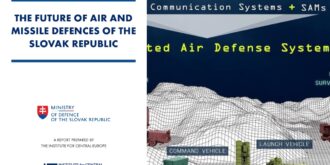
A national obligation: Modern air and missile defence for Slovakia
ICE analyst Fred Hardmann Lea discusses the responsibility of a government to protect its citizens. The air defence needs to be considered as one o...
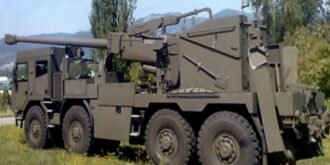
Southeast Asia, the market for Slovak defence exports?
Malaysia will shortly conclude a deal for the Slovak made EVA wheeled self propelled artillery. The final specifics of the Malaysian purchase have ...
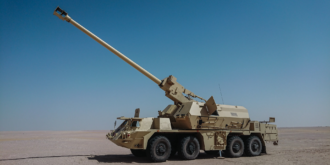
Filling the gap – Russian withdrawal from global defense markets: An opportunity for Slovakia and its ZUZANA 2?
The Russian war in Ukraine also means the decisions of many states to invest more in their defenses. This means an opportunity to revitalize the ar...
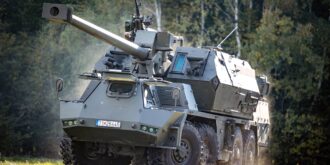
ZUZANA 2 and the future of Slovak defense exports in Europe
Slovak howitzer Zuzana is one of the few comprehensive products of the Slovak armaments industry. It has recently come to international attention a...
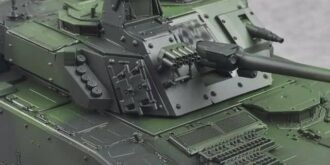
Slovak armour for the 21st century
Fred briefly wrote about the favorites in the historically largest tender on the Slovak defense, which can reach up to 2 billion euros. Slovakia ne...
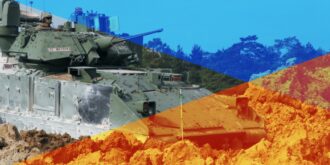
Fred’s remark on Slovak 8×8 Armoured Fighting Vehicle tender
In response to a request for submissions for a new armoured fighting vehicle (AFV) from the Slovak government five designs have been submitted. Spa...
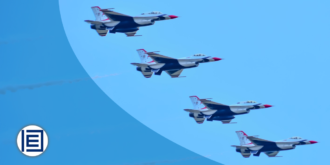
An opportunity for Central European air forces
Niektoré štáty aj v strednej Európe zvažujú prezbrojenie svojich vzdušných síl novými nadzvukovými stíhačkami. Okrem iných nevyhnutností, treba zab...

Czech and Slovak air reforms: a chance for alignment
We are pleased to present our new collaborator: Frederick Hardman Lea.Fred is studying his next school – Crisis and Security Management at th...
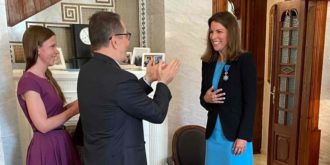
Macron udelil Cséfalvayovej francúzske štátne vyznamenanie
Exposlankyňa momentálne pôsobí ako riaditeľka Inštitútu pre centrálnu Európu. Bývalej predsedníčke Zahraničného výboru Národnej rady a prodekanke p...

Deň, keď si Američania volia Ameriku
Vždy som mala o niečo bližšie k republikánskemu pohľadu na svet…. Zdá sa, že víťaza volieb Spojené štáty v najbližších hodinách a možno ani d...

Pakt o migrácii a azyle: kompromis, ktorý nevyšiel
Európska komisia 23. septembra predstavila svoj návrh Paktu o migrácii a azyle, ktorý má byť návrhom nového prístupu, predstavujúceho kompromis med...

Čas hovoriť o revolúcii 5G
Telekomunikačná sieť piatej generácie je spájaná s veľkými očakávaniami. Len pred pár dňami prešla médiami málo povšimnutá informácia, že slovenská...

What our response to the COVID-19 pandemic tells us of our capacity to respond to climate change
In the face of the COVID-19 pandemic, many governments are currently implementing urgent, costly and radical measures to slow down the spread of th...
« Faute de convaincre les pays rétifs à l’accueil des migrants, l’Europe cède à leurs exigences »
Katarina Csefalvayova, directrice du think tank Institute for Central Europe, et François Gemenne, chercheur en science politique, estiment, dans u...

Fungovanie rezortu obrany po prvých šiestich mesiacoch
Vyjadrenie Martina Fedora otázke webu Refresher k hodnoteniu fungovania rezortu obrany po prvých šiestich mesiacoch: Samozrejme na komplexnejšie ho...

Kam až siaha akademická sloboda?
Možno nastal čas pýtať sa, či aj akademická samospráva nepotrebuje pomoc zvonka. V ostatnom čase sa zdá, že skôr ako vďaka vedeckej excelentnosti č...

SMK chce konflikt, nie autonómiu.
Maďari na Slovensku potrebujú normálne, moderné zastupovanie svojich záujmov. Memorandum, ktoré zástupcovia SMK odovzdali premiérovi pri príležitos...