ACRONYM analysis: How have European attitudes toward migration evolved over the past decade?

This analysis examines public opinion on migration in France, Germany and the Visegrad countries between 2014 and 2024 using Eurobarometer survey data. It traces how the salience of migration, perceptions of non-EU immigration and support for EU migration governance have changed in response to major political and geopolitical events.

The findings highlight a persistent divide between Western and Central Europe, while also showing that the perceived importance of migration does not always correspond to the actual number of migrants in a country. By mapping these trends, the study offers insight into how public attitudes continue to shape migration debates and policymaking across Europe.


Read the analysis


What the Iran War Reveals About Europe’s Air Defence Gap

Europe diagnosed the problem correctly — but prescribed a three-year treatment for a condition that can become acute overnight. Institute for Central Europe — Policy Mini Brief | 8 March 2026
Executive Summary
The US-Israeli war on Iran (Operation Epic Fury, launched 28 February 2026) has consumed hundreds of high-value air defence interceptors in under a week, with at least one Gulf ally already requesting emergency resupply. Production of replacement missiles will take over a year at current capacity. European NATO allies — especially Central European states on the eastern flank — depend on the same constrained US production pipeline for their own deterrence. Europe has correctly identified Ukraine’s battle-proven counter-drone model as the solution to the cost asymmetry between cheap attack drones and expensive interceptors, and has launched multiple institutional initiatives to adopt it. But implementation timelines stretch to 2027–2030 — while the Iran war has just demonstrated that magazine depth crises unfold in 96 hours. The timeline is the vulnerability.  
The Interceptor Crisis in Real Time
On 28 February 2026, the United States and Israel launched Operation Epic Fury — a joint campaign targeting Iran’s nuclear infrastructure, missile production, naval forces, and proxy networks. Within 36 hours, Tehran retaliated with hundreds of ballistic missiles and one-way attack drones targeting not only Israel but also US military installations and civilian infrastructure across Bahrain, Kuwait, Qatar, the UAE, Saudi Arabia, Jordan, and Iraq. As Sinem Cengiz of Qatar University’s Gulf Studies Center noted, for the first time in history all Gulf Cooperation Council (GCC) states were targeted by the same actor within 24 hours — “their long-standing nightmare scenario” (Breaking Defense). A week into the conflict, the defence economics has been already unsustainable. Iran’s Shahed-136 drones cost approximately $20,000 each. Each Patriot PAC-3 interceptor used to shoot them down costs between $3.7 and $4 million (Japan Times). At least one Gulf ally has requested emergency interceptor resupply from Washington after its stockpiles ran critically low within 96 hours of fighting (CNN). The Pentagon acknowledged in a closed-door congressional briefing on 4 March that Shahed drones represent a major challenge and that US air defences will not be able to intercept them all (The War Zone, CNN). The production math is punishing. Lockheed Martin produced 620 PAC-3 MSE missiles in all of 2025. An estimated 800 or more interceptors may have been expended in the first days of this war alone, according to Defence Express calculations — potentially requiring over 15 months of uninterrupted production to replace at current capacity. THAAD interceptors, critical against Iran’s most capable ballistic missiles, are in even shorter supply. Planned production increases to 2,000 PAC-3 missiles per year remain years from realisation (Defense Express/United24, Defense Security Monitor). Iran’s strategy is deliberate. By launching mixed salvos — cheap drones as screening assets alongside ballistic missiles as the lethal punch — Tehran collapses the defender’s ability to match the right interceptor to the right threat. In compressed engagement windows, sensor uncertainty and saturation make reliable discrimination between a $20,000 Shahed and a cruise missile operationally difficult, and the consequences of a single leak through the defensive layer are catastrophic enough that expensive interceptors get burned regardless. Retired Lt. Gen. Dan Karbler, former commander of US Space and Missile Defense Command, acknowledged that short-range air defence assets are needed precisely to avoid expending scarce Patriot missiles on drones (ABC News). The resulting cost-exchange ratio — running from 14:1 to more than 100:1 in the attacker’s favour — is not a battlefield anomaly. It is a strategy of systemic attrition aimed at the adversary’s industrial base (Washington Times).  
Europe’s Exposure
The Iran war is unfolding in the Middle East, but its consequences cascade directly into European security. Every Patriot round fired over Abu Dhabi is one fewer round available for NATO’s eastern flank. Every THAAD interceptor consumed in the Gulf degrades the stockpile that was meant to underwrite extended deterrence from the Baltic to the Black Sea. The US defence industrial base does not maintain separate production lines for separate theatres — it runs a single, constrained pipeline that now faces competing demands from an active war, ongoing Houthi interdiction operations, and the standing requirements of European and Indo-Pacific deterrence (Defense Security Monitor). European NATO allies enter this moment from a position of pre-existing weakness. Stockpiles have been significantly drawn down by donations to Ukraine since 2022. Replenishment has been slow. On 17 February — eleven days before the Iran war began — German Foreign Minister Johann Wadephul stated bluntly that Berlin has exhausted its own air defence missile stocks: “We simply don’t have any left” (Euromaidan Press). National procurement timelines remain measured in years (CNBC). If Europe’s largest economy and defence spender has already emptied its reserves before the Iran war even started, the position of smaller Central European states is self-evidently worse. Central European states — Slovakia, the Baltic states, Romania, Poland — are the most exposed: closest to the Russian threat, thinnest in organic air defence capacity, and most dependent on US-sourced systems and munitions that are now being consumed at wartime rates in a theatre 3,000 kilometres away. The war has already demonstrated that the threat is not geographically contained. On 4 March, NATO air and missile defence assets in the eastern Mediterranean intercepted an Iranian ballistic missile heading toward Turkish airspace — the first time the alliance has defended a member state from an Iranian projectile since the conflict began (Bloomberg, France 24). Earlier, on 2 March, a Shahed-type drone struck RAF Akrotiri in Cyprus — a British sovereign base on EU member territory — in what Cypriot officials confirmed was a Hezbollah attack launched from Lebanon, not from Iran directly (TIME, Middle East Eye). Two additional drones heading toward the base were intercepted the same day. Azerbaijan reported Iranian drone strikes injuring civilians (CNBC). NATO’s Aegis Ashore sites in Romania and Poland — systems originally developed with an Iranian ballistic missile threat in mind — are now on full alert (Stars and Stripes). The proxy dimension makes the threat harder, not easier, to defend against. Destroying Iranian launchers does not neutralise a dispersed network of militia launch sites across the Levant. Analysis of the Akrotiri wreckage revealed a Russian-made Kometa-M anti-jamming GNSS receiver — identical to components found in Russian drones and missiles used against Ukraine — indicating that Iran’s drone fleet now carries electronic countermeasures that render simple GPS jamming ineffective (Ukrainska Pravda, United24). The Kometa-M finding also confirms an operational reality Central European defence planners cannot ignore. The same Russian-Iranian technology chain that targets Ukraine and the Gulf can reach European territory through proxy networks — and Moscow’s calculus on its own western flank may shift as it observes US interceptor stockpiles being consumed thousands of kilometres away.  
None of this is wrong. But all of it is too slow.
Europe has correctly identified both the problem and the direction of the solution. Ukraine’s four-year experience of defending against massed Russian drone attacks produced a body of operational knowledge that is directly transferable: low-cost FPV interceptor drones that destroy drones at a fraction of the cost of a missile; decentralised mobile teams combining electronic warfare with kinetic intercept; compressed innovation cycles that adapt to new threats in weeks rather than years. European states are already adopting Ukrainian-proven systems and tactics in counter-drone warfare, electronic warfare integration, and long-range strike methods (Jamestown Foundation). A caveat: the Kometa-M finding at Akrotiri confirms that even “cheap” drones now carry frequency-agile anti-jamming systems, meaning that effective counter-drone defence will require more sophisticated electronic warfare capabilities than basic GPS jamming alone. Far from weakening the case for learning from Ukraine, this makes it more urgent: Kyiv has been adapting its EW tactics to Russian countermeasures in real time for four years. European institutions have recognised this. On 11 February, the European Commission published its Action Plan on Drone and Counter-Drone Security, explicitly referencing a Drone Alliance with Ukraine (European Commission). On 20 February, the E5 nations — France, Poland, Germany, the United Kingdom, and Italy — announced a joint programme to produce low-cost air defence systems and autonomous drones using Ukrainian expertise (AP/PBS). The European Drone Defence Initiative, the Eastern Flank Watch, and the European Air Shield are all moving through institutional channels (European Policy Centre). The analytical logic is sound: build a cheap lower layer to handle drone threats so that expensive conventional interceptors — Patriot, SAMP/T, IRIS-T SLM — are preserved for the ballistic and cruise missile threats that only they can defeat. The European Drone Defence Initiative targets first operational capabilities by end of 2026 and full functionality in 2027. The broader Defence Readiness Roadmap stretches to 2030. The E5 programme has pledged to cover the investments (Dronelife, AP/PBS). These timelines were designed under the assumption that Europe would have years of uninterrupted time window to implement its adaptation. The Iran war has just demonstrated that magazine depth crises unfold in four days. That is not a planning assumption, it is already an observed and confirmed fact. The European implementation timeline and the threat timeline are mismatched by orders of magnitude. The September 2025 incursion of Russian Gerbera one-way attack drones into Polish airspace already illustrated the cost asymmetry: multi-million-dollar Patriot missiles and F-35s were used to intercept drones worth no more than $10,000 each (European Leadership Network). That incident was a warning. The Iran war is the proof.  
Closing the Gap
The challenge is not conceptual. Europe knows what needs to be built. The challenge is tempo — and tempo cannot be solved by committee. Three immediate steps would narrow the gap between strategy and operational reality. First, accelerate procurement of fielded Ukrainian counter-drone systems and solutions through emergency acquisition pathways, bypassing standard EU and national procurement cycles. Ukraine is already exporting operational knowledge to Gulf states at British invitation. Central European allies should be first in line, not last. Poland’s existing bilateral drone cooperation with Ukraine provides a template. Slovakia, Romania, and the Baltic states should replicate it immediately. Second, reframe European counter-drone investment as interceptor conservation, not as a separate capability track. A $4 million interceptor is justified when it prevents a $4 billion catastrophe. But the calculus collapses when finite stocks are depleted on threats that could have been neutralised at a fraction of the cost. Every euro spent on a system that can destroy a $20,000 drone without expending a $4 million missile is a saving that keeps scarce conventional interceptors available for the threats only they can defeat. This reframing matters for political buy-in: it ties cheap drone defence directly to the credibility of NATO’s conventional deterrence posture. Third, treat the Iran war as the stress test it is and publish honest assessments of national magazine depth. European allies have avoided transparent accounting of interceptor stockpiles for understandable reasons of operational security. But the political urgency required to override procurement inertia depends on democratic publics and parliaments understanding the scale of the gap. If a Gulf states can exhaust their interceptor supply in four days of fighting, European leaders must answer how long their own stocks would last under comparable conditions — and what they intend to do about it before 2027.  
Conclusion
The Iran war did not create Europe’s air defence vulnerability. It revealed it on an accelerated timeline. Europe diagnosed the problem correctly, identified Ukraine’s experience as the most relevant operational model, and launched institutional initiatives that point in the right direction. But the pace of implementation assumed the time. That assumption is now empirically proved incorrect. The interceptor stockpiles that European security depends upon are being consumed in real time in a theatre Europe does not control and cannot resupply. The cheap, adaptive counter-drone layer that would mitigate this dependency exists as a proven concept but not yet as a fielded European capability. The timeline is the vulnerability. The question is no longer what to build, but whether Europe can build it before it needs it.  

The Iran Conflict and European Energy Security: Short- and Mid-Term Implications

This crisis is the strongest argument yet for accelerating clean-energy deployment as a hard security imperative.

Institute for Central Europe — Mini-Brief | 4 March 2026


Situation Overview

The US-Israeli strikes on Iran launched on 28 February 2026 have triggered a cascading energy-security crisis with direct consequences for Europe. Tehran’s retaliatory missile and drone salvos have struck Gulf energy infrastructure, disrupted shipping through the Strait of Hormuz. This forced QatarEnergy — operator of the world’s largest single-site LNG export complex — to halt operations at both Ras Laffan and Mesaieed industrial complexes and declare force majeure on contracted cargoes (Bloomberg, CNBC).

Saudi Aramco’s 550,000 bpd Ras Tanura refinery — one of the largest in the Middle East — underwent a precautionary shutdown after debris from intercepted drones caused a fire on March 2; the facility was struck again on March 4 by a drone (no significant damage reported), establishing a pattern of repeated targeting of Gulf energy infrastructure (Bloomberg, Reuters/Zawya).

The Strait of Hormuz has moved from severe disruption to effective closure. On 2 March, a senior IRGC official formally declared the strait closed and threatened to fire on any vessel attempting transit. By 4 March, the IRGC Navy claimed “complete control” of the waterway. Traffic dropped from approximately 70% initially to near-zero by March 1–2; at least five tankers have been struck and two crew killed.

Approximately 3,200 ships — roughly 4% of global tonnage — are idle in the Gulf, with another 500 waiting outside (Clarksons Research). One tanker (Pola) made a rare dark transit with AIS switched off. Major container lines including Maersk and Hapag-Lloyd suspended all Hormuz transits.

Iran does not need to maintain a formal blockade: insurance repricing, electronic interference, and demonstrated willingness to attack vessels create commercial paralysis through self-deterrence (Euronews, Al Jazeera). Roughly 20 million bpd of oil — a fifth of global consumption — and about one-fifth of global LNG trade transit the Strait (Bruegel).


Short-Term Impacts (Days to Weeks)

Natural gas is the more acute vulnerability. European benchmark gas prices (Dutch TTF) surged from the low 30s to intraday highs above 63 EUR/MWh — the 52-week range high — though settlement has oscillated between 50–60 EUR/MWh amid extreme volatility.

Goldman Sachs revised its April 2026 forecast to 55 EUR/MWh from 36; Goldman further estimated a month-long Hormuz closure could push European gas prices up 130% from pre-crisis levels (Bloomberg). The QatarEnergy halt is among the most significant unplanned LNG outages in the industry’s history, temporarily removing roughly one-fifth of global LNG export capacity.

Europe enters this crisis in a weaker position than in previous years. EU gas storage stood at approximately 30% of capacity at end-February 2026, well below last year’s levels (roughly 40% at the same point in 2025) (Euronews). German inventories were at ~20.5%, France similarly low. If the Qatari outage persists beyond 30 days, the EU may be forced to trigger the Gas Demand Reduction Plan far earlier than anticipated.

Although Qatar’s direct share in European LNG imports is 12–14%, the indirect impact is far greater: over 80% of Qatari LNG normally goes to Asia, and disruption forces Asian buyers onto global spot markets, intensifying competition for remaining cargoes from the US and Australia. This mirrors the 2022 dynamic: fewer molecules, more buyers, spiralling prices.

On oil, Brent rose to approximately $82/barrel (+6–13% depending on session), with JPMorgan warning a multi-week Hormuz squeeze could push prices above $100 (CNBC). OPEC+’s decision on 1 March to add 206,000 bpd from April is symbolic rather than material: if Hormuz is constrained, production targets offer limited relief — logistics, not quotas, determine deliverable supply (France 24).

OPEC+ spare capacity is concentrated in Saudi Arabia and the UAE (~2.5 million bpd combined per IEA), and both face the same transit risks.


Mid-Term Outlook (Weeks to Months)

If the conflict remains limited and Hormuz reopens, a gradual price correction is plausible but not guaranteed. Damage to Qatari LNG infrastructure will require assessment and repair on an uncertain timeline. Saudi Arabia has begun rerouting some crude exports to Red Sea ports to avoid Hormuz, but this offers partial relief at best.

A significant policy signal emerged on 4 March: Norway’s Energy Minister Terje Aasland stated that the Iran crisis could reopen the EU debate over banning Russian gas imports — an implicit acknowledgment that the EU’s phased ban (spot LNG already restricted in early 2026, pipeline gas scheduled for late 2027) may be unsustainable under current conditions (Reuters via Zawya). The EU itself, however, told member states it sees “no immediate effect” on gas supply security — a position at odds with a 75% weekly price spike.

The macroeconomic impact compounds Europe’s fragile recovery. As ING economists warned, the Iran conflict could not have come at a worse time: the eurozone had just emerged from stagnation, and its recovery was already undermined by US tariff uncertainty — meaning Europe now faces an energy shock on top of a trade shock (NL Times).

A sustained $15/barrel oil increase could add roughly half a percentage point to European inflation over 12 months, depending on pass-through dynamics. The ECB, due to publish new projections on 19 March, will likely revise its energy assumptions sharply upward from its December baseline of 29.6 EUR/MWh for gas and $62.5 for crude (Reuters).

China is reportedly pressuring Tehran to keep Hormuz open (Bloomberg) — though Beijing may simultaneously seek discounted Iranian crude via the “dark fleet,” dampening its incentive for full de-escalation. The IEA has signalled readiness to coordinate a strategic petroleum reserves release, noting member states hold over 1.2 billion barrels of emergency stocks (Bloomberg).


Escalation Scenarios (as of 4 March)

The appointment of Mojtaba Khamenei as Iran’s new Supreme Leader — reportedly under IRGC pressure — and Tehran’s explicit refusal to negotiate with the United States significantly alter the probability distribution across scenarios. A short conflict lasting two to three weeks, with Hormuz reopening, now appears less plausible: the new leadership signals continuity of confrontation, not de-escalation.

Were it to occur, prices would correct toward 40–50 EUR/MWh and the refill season would be compressed but not derailed. A protracted standoff of four to eight weeks — now the baseline scenario — would sustain prices above 50–60 EUR/MWh, likely triggering EU demand-reduction measures, a coordinated IEA reserve release, and the EU Gas Coordination Group (which convened on 4 March) moving to crisis-response mode.

A regionalization scenario — with direct attacks on Gulf production infrastructure across multiple states — would constitute a systemic shock comparable to 2022, pushing Brent above $100. The repeated drone strikes on Ras Tanura (March 2 and 4) and Iran’s demonstrated willingness to strike Qatari LNG facilities suggest that energy infrastructure has already become an explicit instrument of escalation.


Policy Implications for Central Europe

For Central Europe, the Iran crisis arrives on top of an already acute supply disruption. The Druzhba pipeline — the sole conduit for Russian crude to Slovakia and Hungary — has been offline since a Russian drone strike damaged infrastructure near the Brody oil hub on 27 January 2026. Successive restart deadlines have been missed, including the latest on 4 March.

Slovakia declared a national energy emergency; Hungary blocked a EUR 90 billion EU loan to Ukraine until flows resume. Both governments accuse Kyiv of deliberately prolonging the outage, while Ukraine says the pipeline was extensively damaged and repair under ongoing Russian bombardment is dangerous.

The European Commission and EU Council President Costa personally requested inspection access during their 24 February Kyiv visit but were denied on security grounds. On 4 March, Putin met Hungarian Foreign Minister Szijjártó specifically to discuss the Druzhba standoff, with the Kremlin describing Ukraine’s actions as “blackmail.”

Fico-Zelenskyy talks are proposed for March 6 or 9, though prospects remain uncertain (Financial Times, Kyiv Independent, EUobserver).

Slovakia and Hungary thus face a dual supply squeeze unique in the EU: pipeline crude from Russia cut since January, global energy markets convulsed by Hormuz since February. Slovak Deputy Foreign Minister Marek Eštok stated after the extraordinary EU foreign ministers meeting that the combination of Hormuz closure and Druzhba disruption “would directly threaten Slovakia’s energy security” — an official confirmation of the dual-squeeze dynamic (STVR).

Slovakia’s Slovnaft refinery is configured almost exclusively for Russian crude; the alternative Adria pipeline via Croatia remains limited in capacity and politically contested. The Druzhba standoff has already fractured EU solidarity — blocking the 20th Russia sanctions package and the Ukraine aid loan — and the Iran crisis risks deepening this rift by raising the political cost of energy insecurity in Budapest and Bratislava.

This is the first energy crisis of the post-Russia era that originates outside Europe — and it is maritime and system-wide rather than supplier-specific. Post-2022 diversification toward LNG (Swinoujscie, Krk, German FSRUs) reduced dependence on Russia but did not eliminate geopolitical exposure.

If Qatari LNG contracts trigger force majeure and Asian buyers outbid European utilities for spot cargoes, Central European LNG infrastructure risks significant underutilization by late spring. Bruegel has outlined contingency recommendations including coordinated monitoring of LNG cargo diversions to Asia, EU-wide demand reduction, and coordinated storage refill (Bruegel).

For Central European governments, immediate priorities are: resolving the Druzhba impasse through credible international inspection; pre-authorizing demand curtailment playbooks; coordinating LNG procurement against intra-EU bidding wars; and addressing interconnector bottlenecks limiting regasified LNG flows into landlocked markets.

No diversification of hydrocarbon suppliers eliminates geopolitical risk — it merely shifts its geography. This crisis is the strongest argument yet for accelerating clean-energy deployment as a hard security imperative.

Why Facts Are Not Enough

From Climate Inaction to Democratic Vulnerability: Psychological Barriers in the Age of Climate Disinformation

ICE Perspective

At the Institute for Central Europe, we examine climate governance not only as an environmental challenge, but as a democratic one. Climate disinformation does not operate in a vacuum. It interacts with psychological vulnerabilities, identity dynamics, and trust in institutions. Understanding the behavioral architecture of climate inaction is therefore essential for designing resilient democratic responses. This article contributes to ICE’s growing work at the intersection of environmental governance, public discourse, and democratic resilience.


By Beáta Sobotová

Across Europe, public concern about climate change remains consistently high. According to Eurobarometer surveys, a large majority of citizens consider climate change a serious problem and support environmental protection. Yet large scale behavioral change remains limited, and public support for ambitious climate policies often fluctuates or becomes politically contested.

This gap between concern and action is persistent. It cannot be fully explained by lack of knowledge, economic constraints, or technological limitations.

Understanding it requires us to look at the psychological barriers that inhibit climate action and at the ways in which these barriers can be amplified in polarized information environments. If democratic societies want to strengthen resilience against climate disinformation, they must understand not only what people believe, but what prevents them from acting on those beliefs.


The Green Gap: When Values Do Not Translate into Action

Many individuals endorse pro environmental values. They recognize the seriousness of climate change and express moral concern. However, decades of research in environmental psychology show that attitudes alone are weak predictors of behavior.

This discrepancy is often described as the intention behavior gap or the green gap. Meta analyses and integrative models, including the Theory of Planned Behavior (Ajzen, 1991) and the Value Belief Norm theory (Stern et al., 1999), demonstrate that behavior is shaped by perceived norms, perceived control, identity processes, and contextual constraints.

Within this broader framework, psychological barriers play a crucial mediating role. Research shows that such barriers can interrupt the link between environmental values and actual pro environmental behavior. They function as cognitive and motivational filters that allow individuals to disengage, rationalize, postpone, or minimize action.

One of the most influential conceptualizations comes from Robert Gifford, who introduced the notion of the “Dragons of Inaction,” a set of psychological barriers that limit climate mitigation and adaptation despite awareness of the problem (Gifford, 2011; Gifford, 2013). These barriers help explain why widespread concern does not automatically translate into consistent behavioral or political engagement.


The Architecture of Psychological Barriers

Empirical research identifies several recurring psychological mechanisms that constrain climate action.

A central barrier is the perception that change is unnecessary. Individuals may acknowledge climate change but minimize its urgency or personal relevance. This does not necessarily take the form of outright denial. It can operate subtly as a belief that incremental adjustments are sufficient.

Fatalism represents another powerful barrier. When people believe that it is already too late, or that individual actions are insignificant compared to global processes, disengagement becomes psychologically coherent. Fatalism is consistently associated with lower pro environmental behavior and weaker climate policy support.

Technosalvation reflects the belief that future technological innovation will solve climate change without requiring substantial lifestyle or systemic change. While technological optimism is not inherently problematic, it can reduce perceived responsibility for present action.

Ignorance and uncertainty also play a role. Many individuals report lacking clarity about which actions are most effective. Uncertainty about impact weakens motivation and increases the likelihood of inaction.

Tokenism and compensatory beliefs create a sense that small actions are sufficient. When individuals perceive limited efforts as adequate, they may morally license themselves to maintain environmentally detrimental behaviors.

Finally, identity tensions and ideological polarization shape engagement. Political ideology strongly predicts climate skepticism and resistance to environmental policy, particularly in polarized contexts (Hornsey et al., 2016; Hornsey et al., 2018). Identity protective cognition reinforces preexisting worldviews and reduces openness to behavior change.

These barriers interact. They cluster, reinforce one another, and are embedded in broader social narratives.


When Disinformation Activates Psychological Barriers

Climate disinformation rarely succeeds by persuading the majority that climate change is a hoax. Its effectiveness lies elsewhere.

Disinformation works by activating and amplifying existing psychological barriers.

Messages that emphasize scientific uncertainty reinforce beliefs that change is unnecessary. Narratives portraying climate action as economically destructive intensify goal conflicts. Stories suggesting inevitable collapse strengthen fatalism. Overstated technological promises encourage technosalvation. Polarized framing activates identity-based resistance.

In this sense, disinformation does not need to replace beliefs. It only needs to lower motivation.

Research on pluralistic ignorance shows that individuals often underestimate the degree to which others share their concern about climate change (Geiger and Swim, 2016). When public discourse appears polarized or dismissive, individuals may withdraw from visible engagement even if privately concerned. This climate of silence further weakens collective action.

In fragmented media ecosystems characterized by declining institutional trust, these psychological dynamics become especially consequential. Climate disinformation exploits not only informational vulnerabilities but also motivational and identity-based processes.

Understanding this psychological infrastructure is therefore essential for designing effective counter strategies.


Evidence on Interventions: What We Know So Far

Experimental research has tested interventions designed to reduce psychological barriers and promote pro environmental engagement.

Awareness and empowerment strategies that combine educational information with self-efficacy enhancement can reduce belief-based barriers and increase perceived behavioral control. Social norm interventions that make visible the widespread support for climate action can shift perceived norms and reduce the discrepancy between personal and perceived collective concern (van der Linden et al., 2015; Sparkman and Walton, 2017).

However, the effects of single exposure interventions are typically modest and often short lived. Meta analyses of pro environmental behavior interventions confirm that durable change usually requires sustained engagement, feedback, and contextual support (Nisa et al., 2019; van Valkengoed et al., 2022).

Increased self-efficacy does not automatically translate into sustained behavior when structural barriers, identity conflicts, or economic constraints remain strong. Norm based interventions are more effective when aligned with salient identity groups and core values.

These findings underscore a central lesson for policymakers: information alone is insufficient. Behavior change requires alignment between motivation, identity, opportunity structures, and supportive social norms.


Policy Implications: Integrating Behavioral Science into Climate Governance

The implications for public policy are significant.

First, climate communication strategies should be grounded in behavioral science. Public campaigns that focus exclusively on disseminating scientific facts may overlook the psychological barriers that filter and reinterpret those facts. Policy design should explicitly address fatalism, perceived inefficacy, and identity-based resistance.

Second, countering climate disinformation requires more than reactive fact checking. It requires proactive strategies that strengthen environmental self-efficacy, increase visibility of shared concern, and reduce pluralistic ignorance. Communication should highlight dynamic norms and demonstrate that climate engagement is growing across diverse social groups.

Third, climate policy should account for socioeconomic disparities. Research shows that perceived behavioral control and access to resources vary significantly across income groups. Policies that reduce structural barriers, such as access to affordable renewable energy or sustainable transport, can enhance both equity and engagement.

Fourth, democratic institutions should integrate behavioral insights into participatory processes. Citizens’ assemblies, deliberative forums, and community-based initiatives can reduce fatalism by strengthening perceived collective efficacy and shared identity.

Finally, European level initiatives addressing climate disinformation should adopt interdisciplinary approaches that connect media studies, psychology, political science, and public policy. Effective responses must target not only informational content but also the motivational architecture that makes societies vulnerable to manipulative narratives.


From Individual Behavior to Democratic Resilience

Climate inaction is not only an environmental problem. It is also a democratic one.

Psychological barriers influence not only private behaviors but also civic participation and support for climate policy. When fatalism or technosalvation dominate, citizens may withdraw from democratic processes related to climate governance. When polarization intensifies, climate policy becomes an identity marker rather than a shared societal challenge.

Strengthening democratic resilience in the climate domain therefore requires building psychological resilience. Citizens who feel informed, efficacious, and socially supported are less vulnerable to narratives that promote disengagement.

Bridging the green gap requires a systemic perspective that integrates individual psychology with institutional design and media ecosystems. It requires recognizing that behavior change unfolds within social, economic, and political contexts.


Conclusion

The climate crisis is often framed as a battle over facts. Yet the deeper challenge lies in the psychological barriers that prevent people from acting on what they already know.

Recognizing and addressing these barriers is not only a matter of environmental effectiveness. It is a matter of democratic stability. When societies understand the motivational architecture of inaction, they are better equipped to design policies and communication strategies that are resilient to manipulation.

Climate governance in the twenty first century must therefore be psychologically informed, socially inclusive, and institutionally robust. Only then can public concern translate into durable action.


References

Ajzen, I. (1991). The theory of planned behavior. Organizational Behavior and Human Decision Processes, 50(2), 179 to 211.

Geiger, N., and Swim, J. K. (2016). Climate of silence: Pluralistic ignorance as a barrier to climate change discussion. Journal of Environmental Psychology, 47, 79 to 90.

Gifford, R. (2011). The dragons of inaction: Psychological barriers that limit climate change mitigation and adaptation. American Psychologist, 66(4), 290 to 302.

Gifford, R. (2013). Dragons, mules, and honeybees: Barriers, carriers, and unwitting enablers of climate change action. Bulletin of the Atomic Scientists, 69(4), 41 to 48.

Hornsey, M. J., Harris, E. A., Bain, P. G., and Fielding, K. S. (2016). Meta analyses of the determinants and outcomes of belief in climate change. Nature Climate Change, 6, 622 to 626.

Hornsey, M. J., Harris, E. A., and Fielding, K. S. (2018). Relationships among conspiratorial beliefs, conservatism and climate scepticism across nations. Nature Climate Change, 8, 614 to 620.

Nisa, C. F., Bélanger, J. J., Schumpe, B. M., and Faller, D. G. (2019). Meta analysis of randomised controlled trials testing behavioural interventions to promote household action on climate change. Nature Communications, 10, 4545.

Sparkman, G., and Walton, G. M. (2017). Dynamic norms promote sustainable behavior, even if it is counternormative. Psychological Science, 28(11), 1663 to 1674.

Stern, P. C., Dietz, T., Abel, T., Guagnano, G. A., and Kalof, L. (1999). A value belief norm theory of support for social movements: The case of environmentalism. Human Ecology Review, 6(2), 81 to 97.

van der Linden, S., Maibach, E., and Leiserowitz, A. (2015). Improving public engagement with climate change: Five best practice insights from psychological science. Perspectives on Psychological Science, 10(6), 758 to 763.

van Valkengoed, A. M., Abrahamse, W., and Steg, L. (2022). To select effective interventions for pro environmental behaviour change, we need to consider determinants of behaviour. Nature Human Behaviour, 6(11), 1482 to 1492.


ACRONYM Policy Paper: Making Cooperation Possible: Narratives, Trust and Moral Frameworks in Europe’s Asylum and Migration Debate

Migration is one of the most polarising issues in Europe – not only because of its scale, but because of the meanings attached to it.

Our new policy paper, Making Cooperation Possible: Narratives, Trust and Moral Frameworks in Europe’s Asylum and Migration Debate, presents the final findings of the ACRONYM project. It argues that cooperation on asylum and migration often fails not due to missing legal instruments, but because it is politically, morally and narratively difficult.

Drawing on comparative Eurobarometer data, focus groups across five countries, a survey among priests and religious leaders in Slovakia and policy dialogues in Bratislava and Paris, the paper shows how migration debates are shaped by moral frameworks, selective empathy, and trust dynamics. It highlights the role of trusted intermediaries, including journalists, educators, and religious actors, in shaping how policies are understood and accepted.

The paper outlines five conditions for advancing cooperation in Europe: recognising different moral starting points, addressing “imagined migration,” managing selective solidarity, rebuilding trust through credible intermediaries and strengthening interpretive capacity.


Read the policy paper


ACRONYM Policy Paper: Making Cooperation Possible: Narratives, Trust and Moral Frameworks in Europe’s Asylum and Migration Debate

Migration is one of the most polarising issues in Europe – not only because of its scale, but because of the meanings attached to it.

Our new policy paper, Making Cooperation Possible: Narratives, Trust and Moral Frameworks in Europe’s Asylum and Migration Debate, presents the final findings of the ACRONYM project. It argues that cooperation on asylum and migration often fails not due to missing legal instruments, but because it is politically, morally and narratively difficult.

Drawing on comparative Eurobarometer data, focus groups across five countries, a survey among priests and religious leaders in Slovakia and policy dialogues in Bratislava and Paris, the paper shows how migration debates are shaped by moral frameworks, selective empathy, and trust dynamics. It highlights the role of trusted intermediaries, including journalists, educators, and religious actors, in shaping how policies are understood and accepted.

The paper outlines five conditions for advancing cooperation in Europe: recognising different moral starting points, addressing “imagined migration,” managing selective solidarity, rebuilding trust through credible intermediaries and strengthening interpretive capacity.


Read the policy paper


Introducing the ACRONYM Educational Package

We are pleased to introduce the ACRONYM Educational Package, a set of teaching resources designed for upper secondary schools and university courses exploring migration, asylum, and integration. The package combines five ready-to-use classroom activities with an educational video series featuring expert insights on key migration topics.

The activities can be used as a structured learning pathway or adapted individually to courses in migration studies, political science, sociology, international relations, law, media studies, and related disciplines. Together, they encourage students to critically reflect on migration narratives, policy frameworks, and lived experiences, helping translate academic research into practical teaching tools.

The Educational Package is intended to support educators, students, and training professionals in developing informed, nuanced, and interdisciplinary discussions on migration and asylum.

Feel free to explore, download, and use these materials in your teaching and learning activities.


Read Introduction


Read EP1

Read EP2

Read EP3

Read EP4

Read EP5


An Interview with Clarissa Tabosa on Teaching, Cooperation, and the Legacy of ACRONYM

As the ACRONYM project comes to a close, we spoke with Clarissa Tabosa, Rotating Chair in Migration and Asylum Studies and Assistant Professor at the Faculty of Social and Economic Sciences, Comenius University Bratislava. In this interview, she reflects on the moments that defined her experience — from the pedagogical intensity of the ACRONYM Summer Schools to the project’s most significant outcomes and its lasting legacies for research, teaching, and collaboration. She also shares why she believes “connection” best captures the spirit of ACRONYM and its contribution to more nuanced and human-centred conversations on migration.

Looking back, which activities or moments did you enjoy the most within your role as Rotating Chair, and why?

Without a doubt, the Summer Schools (I took part in Bratislava and Corsica). There is a specific kind of pedagogical magic that happens when you bring together bright, motivated students from every corner of the globe to discuss complex migration topics. The summer school in Corsica, in particular, stands out as a core memory. It wasn’t just the unforgettable landscape; it was the atmosphere of extreme openness. Our discussions reached a level of critical depth that you rarely find in a standard classroom. We moved beyond theory into the personal (scholars, practitioners, and students) shared lived experiences and stories that stayed with us. According to the feedback we received, many left not just with new knowledge, but with lifelong professional and personal bonds.

In your opinion, what has been the most significant outcome of the ACRONYM project?

The “C” in ACRONYM stands for Cooperation, and I believe the project lived up to that name in a way that was truly transformative. The most significant outcome wasn’t a single paper or report, although these were also relevant, but the unprecedented network we built. We managed to build true cooperation. We brought senior scholars in the field together with junior researchers; we bridged the gap between the Global North and South by putting together students coming from all around the globe. Perhaps most uniquely, we facilitated a dialogue between faith and science, bringing priests and academics, practitioners, and politicians, to the same table. Seeing these people find common ground on migration is a rare achievement, and it is something the entire Team should be immensely proud of.

Now that the project has ended, what do you see as its most promising legacies for future research and teaching?

I believe we have opened a door to a heavily understudied frontier: the role of religious institutions in shaping public perception of migration. Through ACRONYM, we have gathered a massive, high-quality dataset that will serve as a foundation for excellent research in the years to come. Beyond the data, our policy dialogues and conferences have sparked a new wave of interest on the interconnection between faith and migration. We’ve demonstrated that migration governance isn’t just about border counts: it’s about narratives, ethics, and community perception. The legacy of this project is the new generation of researchers we’ve inspired to look at migration through this multi-dimensional lens, in particular, the role of religious institutions in shaping migration.

What parts of this project would you most like to see carried forward into future collaborations or initiatives?

Definitely the collaborative spirit of the project. I want to see that specific model of intellectual community carried forward. We shouldn’t let the connections between these scholars, practitioners, and students go cold. My hope is that the ACRONYM network evolves into a permanent ecosystem of exchange, where the research doesn’t just sit in a journal but continues to be refined by those working on the front lines of migration and asylum every day. This was also one of the goals of the project and I hope it is carried forward through the Migration Hub, a sustained community of experts, researchers, academics, and policymakers working in the field of migration and asylum, serving as a platform for sharing knowledge, research, and other related initiatives.

Lastly, if you had to describe your ACRONYM experience in just one word, what would it be, and why?

Connection. In a field that is often characterized by division, whether political, geographical, or ideological, this project was a bridge. It connected data to human stories, faith to policy, and a diverse group of strangers to a common purpose. It reminded us that at the heart of migration governance, there are always human beings trying to find a way to communicate and to navigate the complex migratory landscape.


ACRONYM Team Wrap-Up Meeting in Bratislava

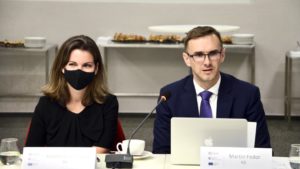
In December 2025, the ACRONYM project team gathered in Bratislava at the Institute for Central Europe (ICE) for its final in-person working meeting of the year. The meeting brought together team members, including representatives of all three project partners – François Gemenne, Anneliese Depoux, and Katarína Cséfalvayová, marking an important moment of reflection and coordination as the project enters its concluding phase.

The working session focused on reviewing the project’s key achievements, consolidating research findings, and identifying the final steps ahead — including publications, policy-oriented outputs, and dissemination activities. It also marked the conclusion of Anneliese Depoux’s long-term mobility in Bratislava, during which she contributed extensively to collaborative research and exchange across the project.

Beyond the meeting room, the team took time to enjoy Bratislava’s Christmas markets, sharing informal conversations and celebrating the collective work accomplished so far. This final gathering of the year captured the spirit of the ACRONYM project: rigorous research, close collaboration, and the value of human connection across borders.


ACRONYM Organises Paris Policy Dialogue on Migration: Key Insights and Outcomes

Paris, 8. December 2025

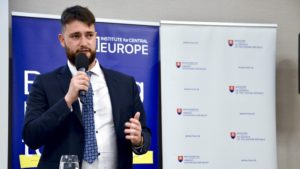
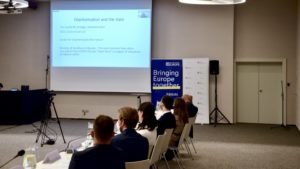
On 8 December 2025, the ACRONYM project organised a closed-door Policy Dialogue on Migration at the Conférence des Évêques de France (CEF) in Paris. The dialogue brought together clergy, theologians, researchers, migration experts, and representatives of Church institutions to reflect on the relationship between Christian teaching, pastoral practice, and contemporary migration debates in Europe. The dialogue took place against a backdrop of growing political polarisation, disinformation, and public anxiety around migration. Its aim was to create a protected space for frank exchange, grounded in empirical research and lived pastoral experience, and to explore how faith-based actors can contribute to more coherent, human-centred approaches to migration governance. Migration beyond emergency thinking A central point of convergence throughout the dialogue was the recognition that migration is not an episodic crisis but a structural and enduring feature of contemporary global life. Participants stressed that both public debate and ecclesial responses remain too often reactive and emergency-driven, despite the Church’s long-standing theological and pastoral tradition rooted in dignity, solidarity, and hospitality. Theologian Fr. Aldo Skoda, Director of the Scalabrini International Migration Institute, emphasized that migration should be understood as a “sign of the times”, challenging the Church to rethink core dimensions of Christian anthropology, ecclesiology, and mission. He highlighted how dominant public categories and narratives often dehumanize migrants and distort integration processes, calling for a renewed theological and pastoral imagination centred on encounter, communion, and responsibility. ACRONYM research as a foundation for dialogue The exchanges strongly resonated with findings from ACRONYM research, including surveys, interviews, and focus groups conducted with priests and lay Catholics across Slovakia, France, Belgium, and Italy. Empirical results were repeatedly confirmed, nuanced, and deepened by clergy’s lived experiences shared during the dialogue. Participants identified a persistent gap between ethical consensus at the level of Church teaching and the fragility of implementation in pastoral and institutional practice. Structural constraints — legal uncertainty, administrative complexity, limited resources, and political pressure — were cited as major obstacles, often leaving clergy to navigate deep moral dilemmas with insufficient institutional support. Education, interdisciplinarity, and institutional support Across interventions, education emerged as one of the most urgent priorities. Participants pointed to insufficient formation on migration, interculturality, and disinformation in seminaries, diocesan structures, and continuing pastoral training. This deficit was directly linked to vulnerability to polarising narratives and fear-based framings that dominate public discourse. The dialogue also underlined the importance of interdisciplinary approaches, bringing theology into closer dialogue with social sciences, legal expertise, and empirical research. Participants agreed that durable responses to migration require integrated frameworks and long-term strategies rather than isolated initiatives. A crisis of narrative coherence Rather than a crisis of numbers, migration was repeatedly described as a crisis of narrative and moral coherence. Political rhetoric, sensationalist media, and disinformation shape public perceptions, while Church actors often feel ill-equipped to respond strategically. Participants stressed the need not only to correct misinformation but to cultivate alternative narratives centred on dignity, encounter, and shared responsibility. The presence of senior representatives of the French Bishops’ Conference was widely interpreted as a hopeful sign that the concerns raised may inform higher-level ecclesial reflection and future institutional action. Looking ahead By organising this Policy Dialogue, ACRONYM strengthened its role as a bridge between research, theology, and policy-relevant discussion. The exchange clarified concrete directions for future work, including strengthened education and training, closer interdisciplinary collaboration, improved institutional support for clergy, and sustained efforts to reshape public narratives on migration. The Paris dialogue reaffirmed that migration is not only a policy issue, but a profound moral test—one that will continue to shape both the Church’s public voice and its credibility in contemporary European societies.